
Dr. Farzad Khalvati, PhD, is Director of Radiology AI, Senior Scientist, and Endowed Chair in Medical Imaging and Artificial Intelligence at The Hospital for Sick Children (SickKids) and University of Toronto. He is Associate Professor in the Department of Medical Imaging and Institute of Medical Science, with cross appointments to the Department of Computer Science, Department of Mechanical and Industrial Engineering, and Institute of Biomedical Engineering at the University of Toronto. He is also a Faculty Affiliate at Vector Institute.
Dr. Khalvati provides strategic leadership to advance a high-impact, collaborative, and clinically grounded research enterprise within the Department of Radiology. His focus is on accelerating innovation in precision medicine including precision radiology, precision oncology, precision neurology, and precision orthopedics through multimodal AI, while aligning research priorities with departmental, institutional, and healthcare missions. He fosters a culture of rigor, inclusivity, and mentorship that empowers faculty and trainees to pursue transformative, patient-centered research.
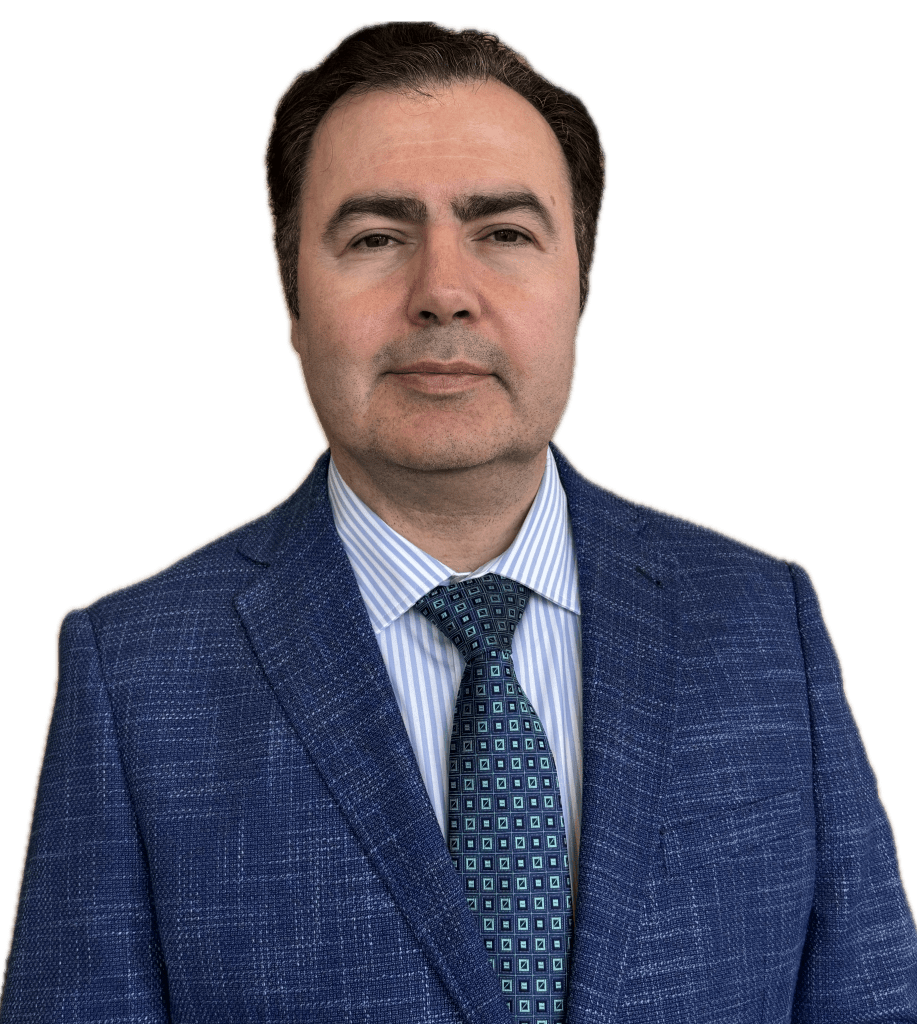
Dr. Farzad Khalvati, Principal Investigator
As an internationally recognized investigator, Dr. Khalvati has secured more than $7 million in competitive research funding from premier agencies, including the Canadian Institutes of Health Research (CIHR), Natural Sciences and Engineering Research Council of Canada (NSERC), and New Frontiers in Research Fund (NFRF). He has authored 130+ peer-reviewed publications, 79 scientific abstracts, and is an inventor on four patents spanning artificial intelligence and medical imaging technologies. His research has advanced multimodal, explainable, and trustworthy AI for precision medicine while also developing AI solutions that improve radiology workflow, operational efficiency, and clinical decision support.
A core priority of Dr. Khalvati’s leadership is faculty development and team science. He has mentored and managed diverse teams of more than 100 trainees, staff, and junior faculty transitioning to research independence. He has established and continuously led two core courses in AI in medicine, AI for Medical Imaging and Natural Language Processing for Medicine, for the past five years, providing a sustainable educational pipeline that equips faculty, fellows, and trainees with the skills needed to lead and participate in AI-driven clinical research.
With specialized expertise in clinical validation, regulatory strategy, and translational pathways for medical devices and AI technologies, Dr. Khalvati is committed to bridging discovery and clinical deployment. His leadership vision is to position the department as a national and international leader in AI-enabled radiology research, driving innovation that improves patient outcomes, advances precision medicine, and promotes equitable, patient-centered care.
EXPERTISE & LEADERSHIP
• Strategic leadership of radiology AI research, advancing a department-wide research enterprise through faculty development, multidisciplinary collaboration, shared research infrastructure, and strategic partnerships that accelerate innovation, strengthen research capacity, and translate scientific discoveries into clinical impact.
• Precision medicine, including precision radiology, precision oncology, precision neurology, and precision orthopedics, leveraging advanced AI to enable personalized diagnosis, risk stratification, treatment planning, and disease monitoring across diverse patient populations.
• Multimodal foundation models and integrative AI, developing scalable methods that combine medical imaging, pathology, genomics, electronic health records, physiologic signals, and clinical language to improve diagnosis, prognosis, and clinical decision-making.
• Explainable, trustworthy, and clinically reliable AI, advancing interpretable AI, uncertainty quantification, robustness, and generalizability to support safe, transparent, and accountable clinical decision-making.
• Clinician-centered AI and radiology workflow innovation, designing AI systems that seamlessly integrate into clinical workflows, improve operational efficiency, optimize imaging utilization, enhance reporting, and support clinical decision support across the imaging enterprise.
• Clinical translation and implementation science, leading the development, prospective validation, regulatory strategy, deployment, and lifecycle monitoring of AI technologies to enable sustainable adoption in routine clinical practice.
• Equitable and responsible AI, developing methods that address fairness, bias, accessibility, and real-world generalizability to ensure AI technologies deliver meaningful benefits across diverse patient populations and healthcare systems.
Dr. Khalvati received his PhD in Electrical and Computer Engineering from University of Waterloo and before joining University of Toronto, he worked as an imaging and AI scientist in biomedical industry and then as a Postdoctoral Research Associate at Sunnybrook Research Institute. Dr. Khalvati is a recipient of several awards from NSERC, OCE, and CIHR and his dissertation was selected and patented by the University of Waterloo Commercialization Office.

